GROUP 2020

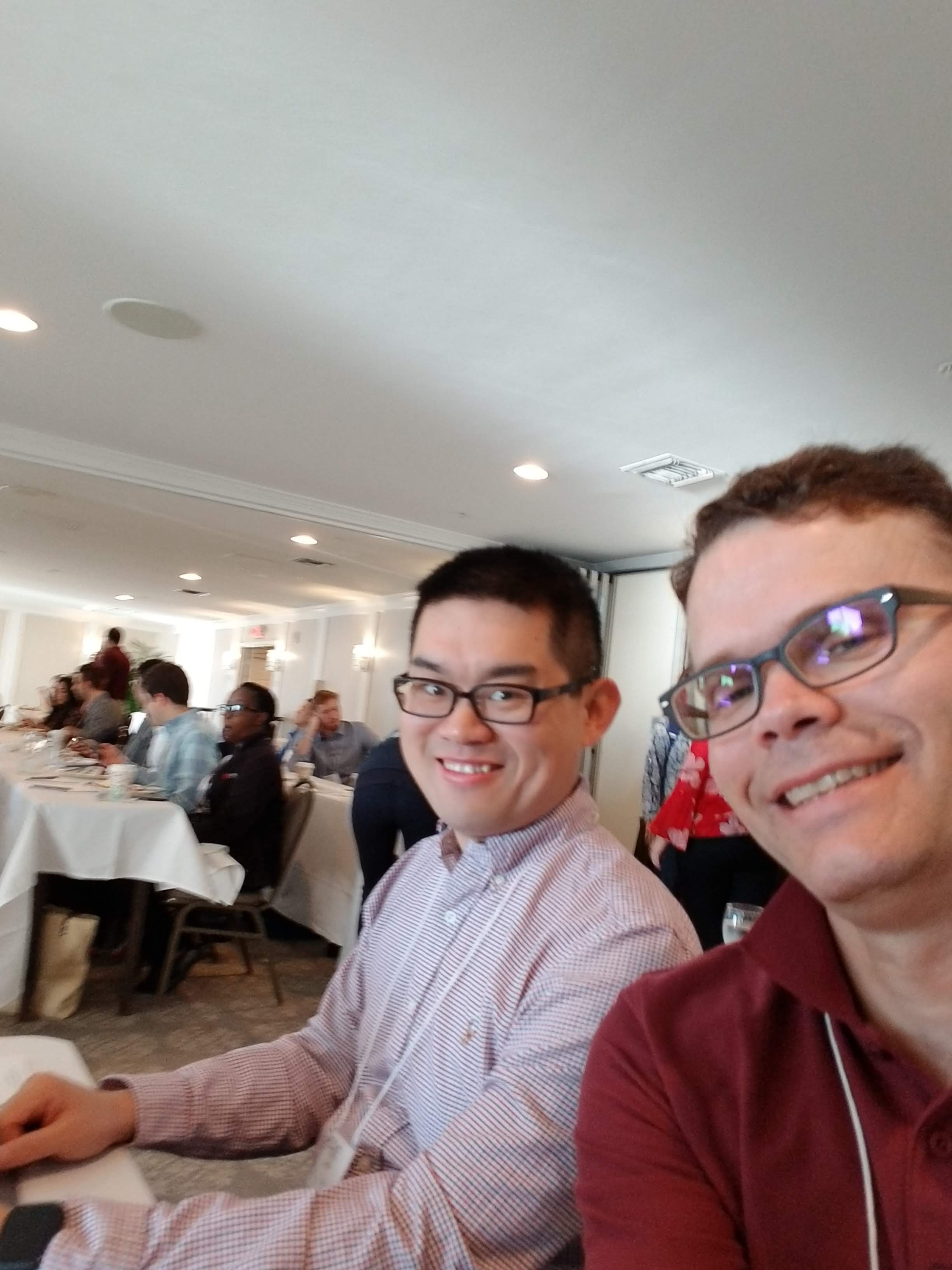
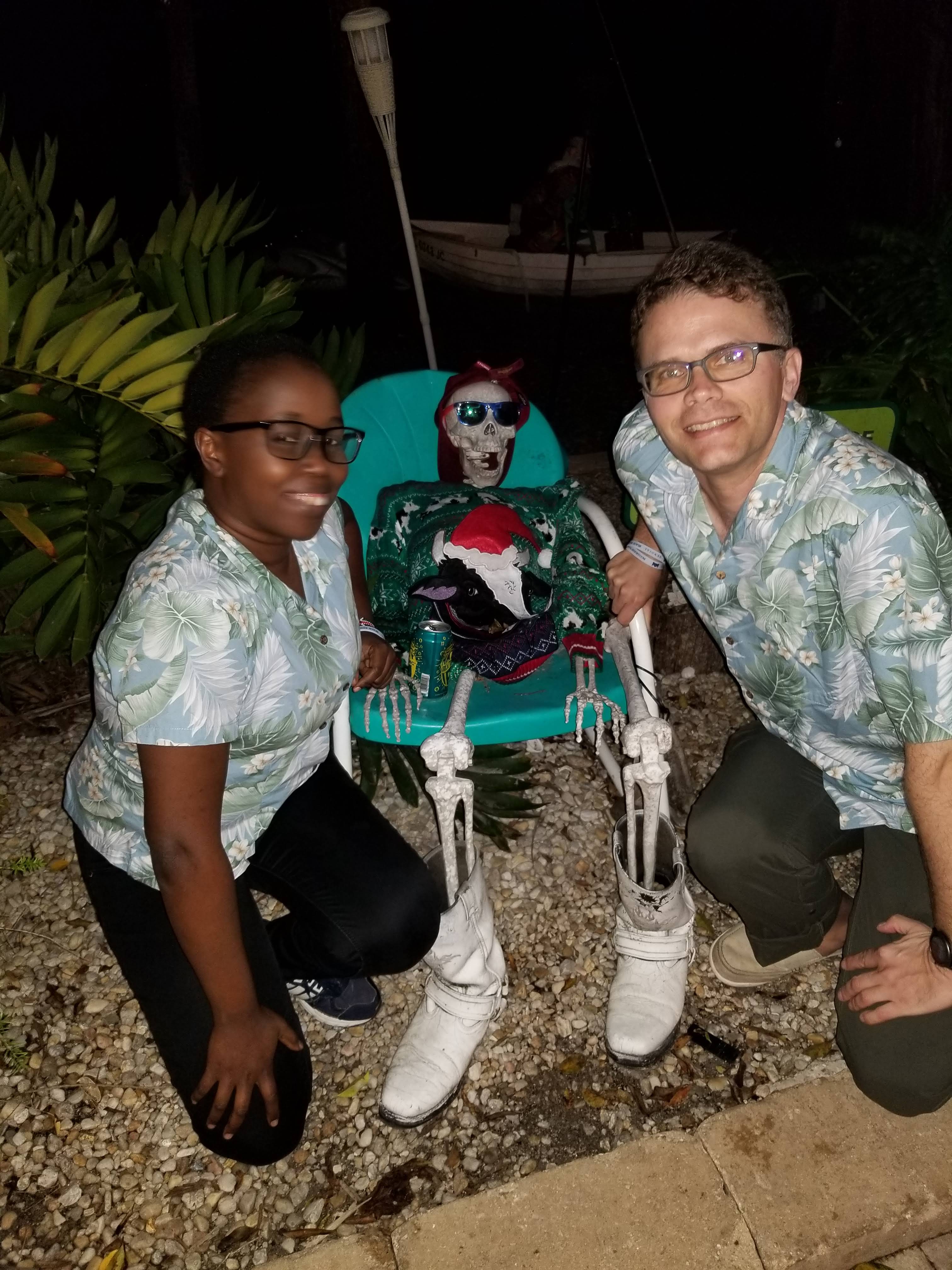
The ACM GROUP Conference is the premiere destination for research work on groups and technology. Held every year in Sanibel Island, Florida, it We were well represented at ACM GROUP 2020–2 full papers, 4 posters, 1 design fiction paper, and 1 doctoral colloquium presentation from this crowd of faculty, grad students, and alums from Computer Science at Virginia Tech!
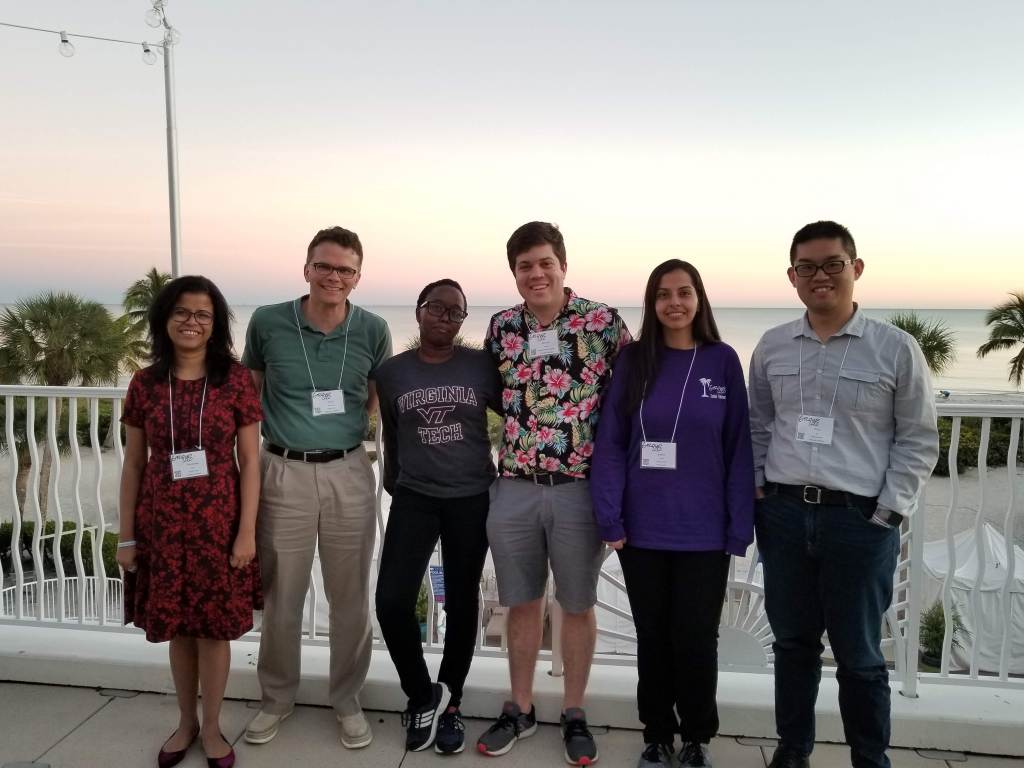
Lindah Kotut had an awesome 36 hour stretch at the ACM GROUP Conference, using it to launch her research ideas on social media use in outdoor settings. First she presented her Ph.D. research directions to top researchers in the field in the doctoral colloquium–summarized in the poster session, where her work was chosen by her peers for the best poster award. And in between, she presented her vision of the future of the selling of personal data in the design fiction session of the conference.

Clark University prof and Virginia Tech Ph.D. graduate Shuo Niu presented his investigation of how people establish personal territory on large digital displays–e.g., for a digital tabletop, if two or more people are working simultaneously then they exhibit ownership of the area closest to them and are offended when others invade the area without permission. This work was a chunk of his Ph.D. research.

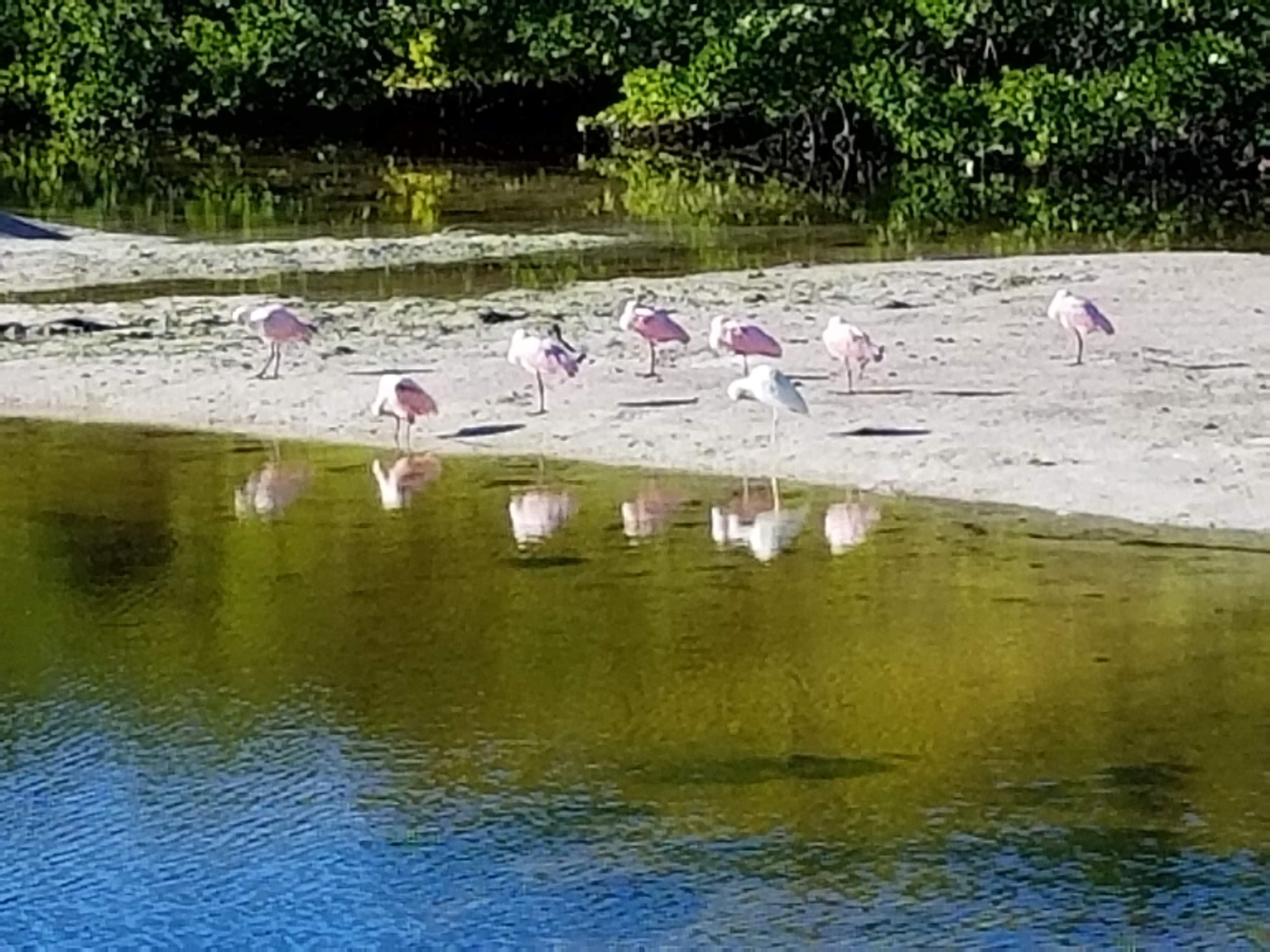
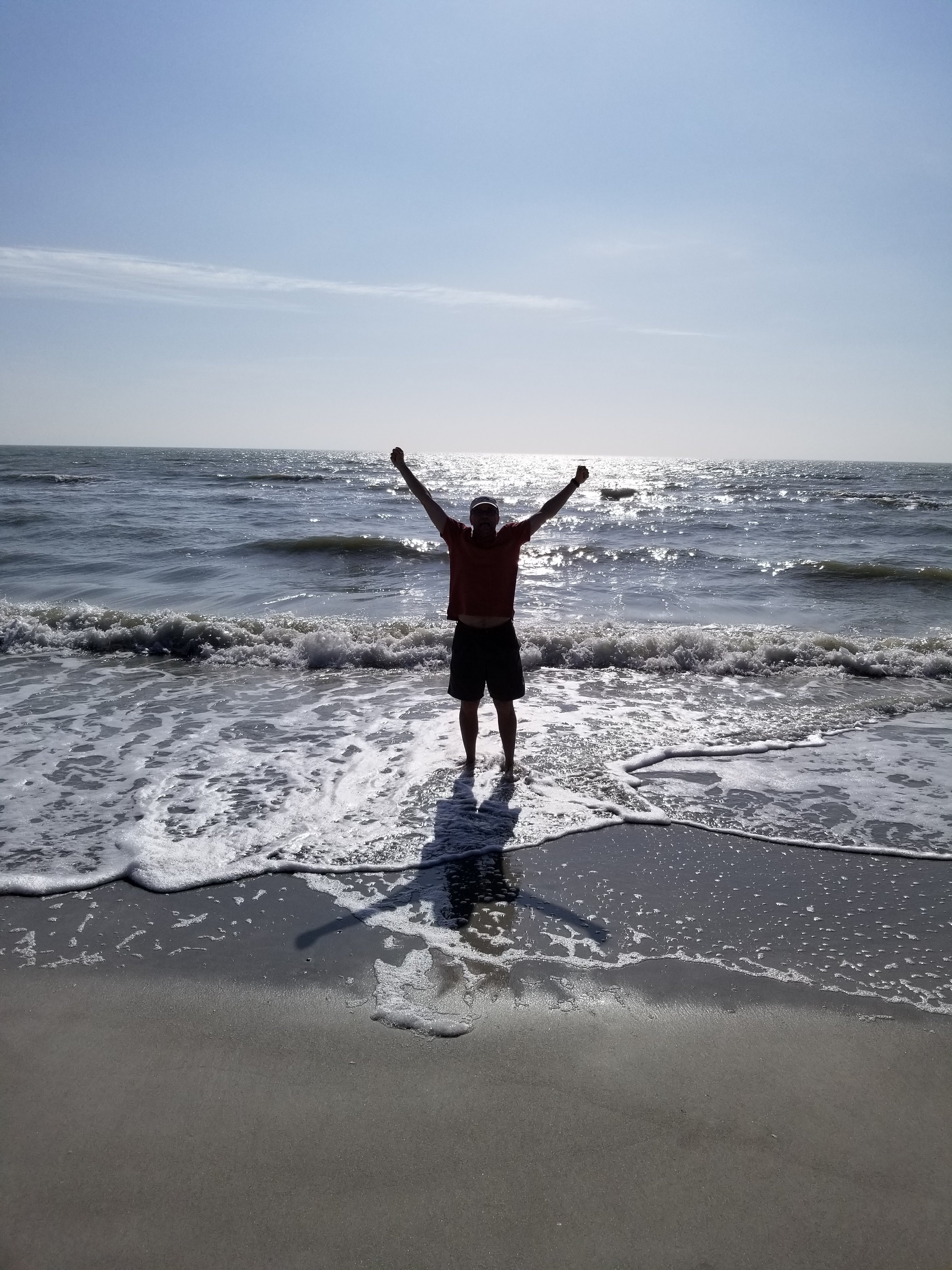
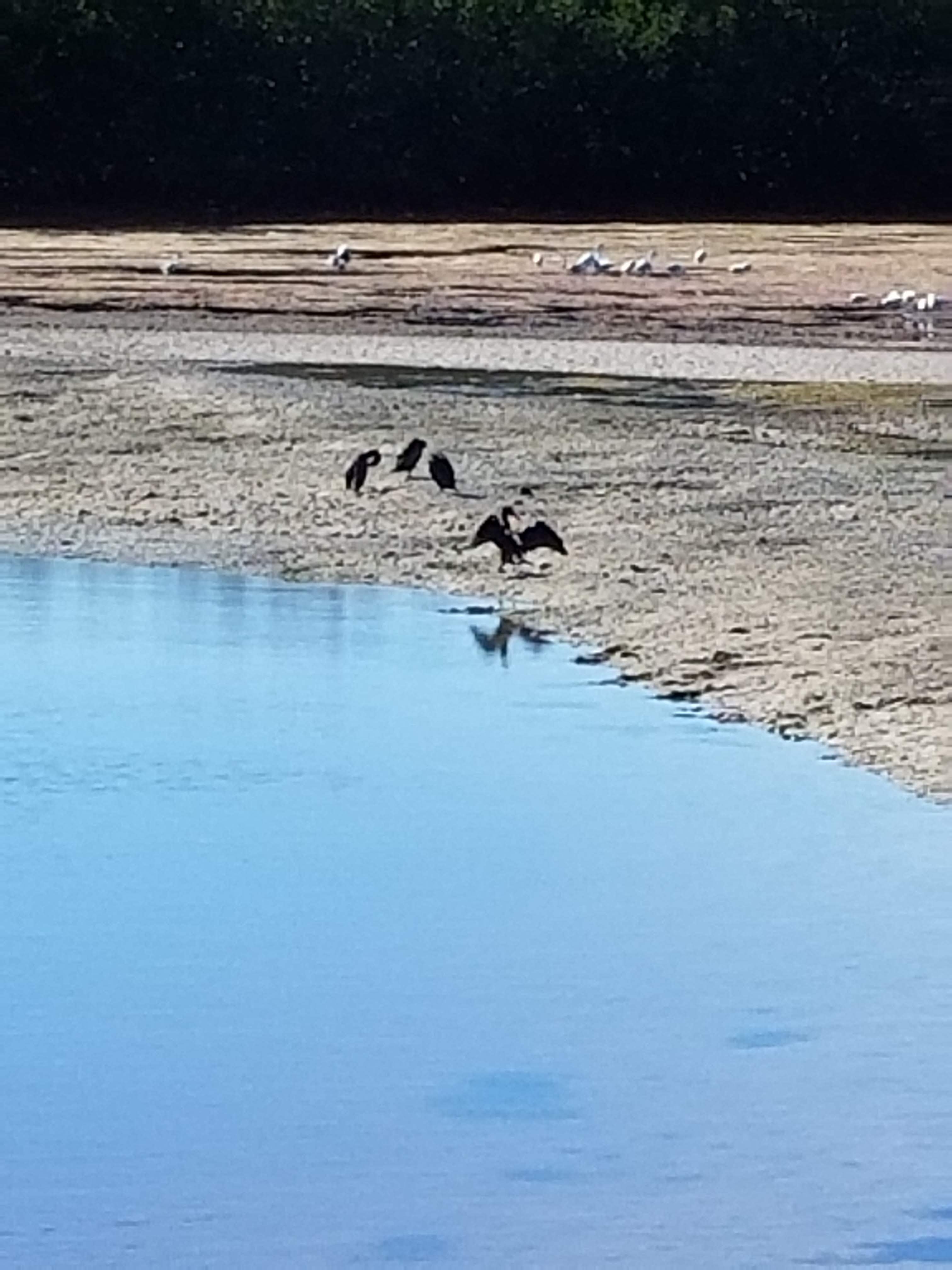
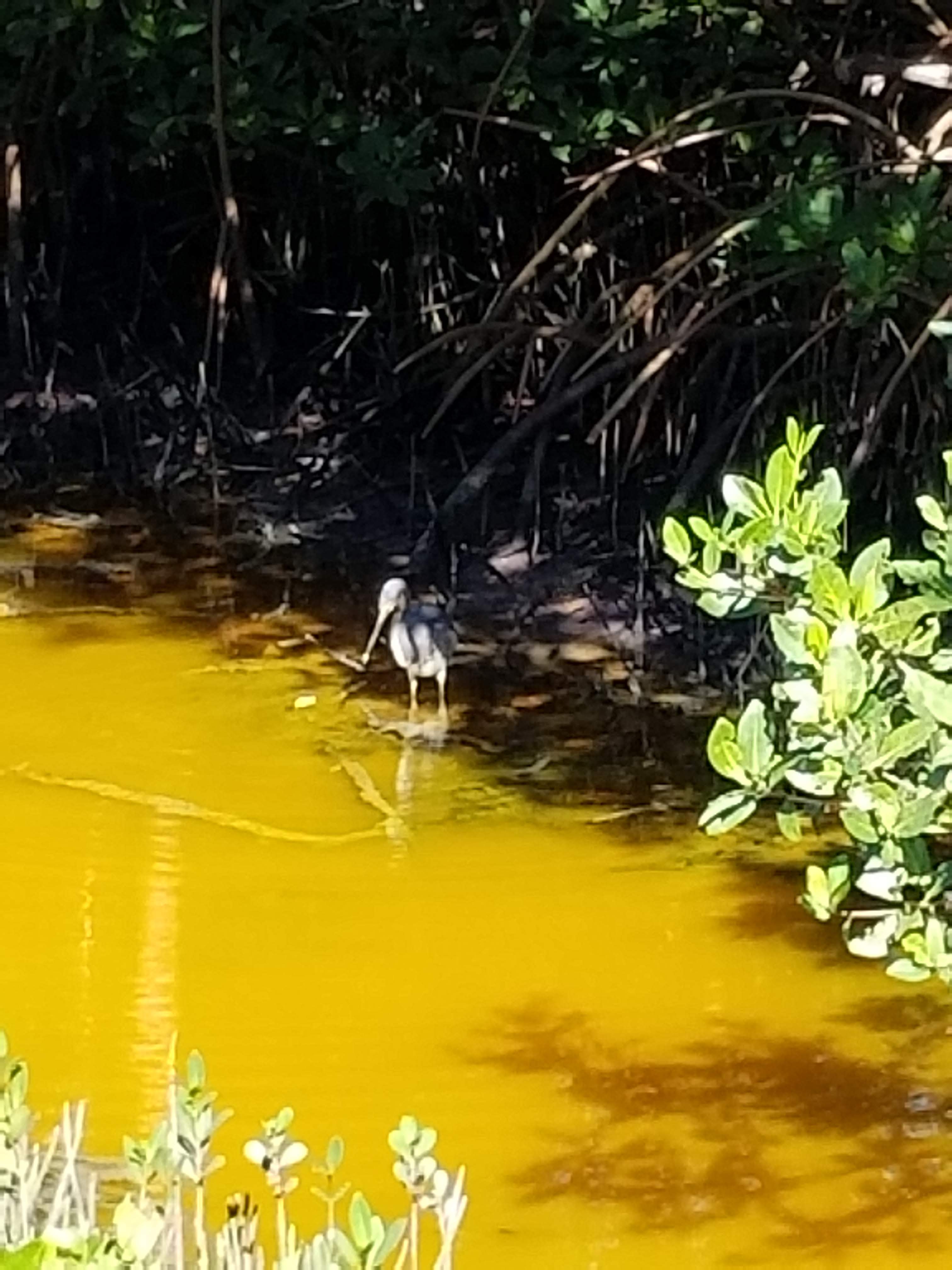
As always, Sanibel Island is an awesome conference destination, particularly in early January when it’s cold in much of the rest of the United States. The Ding Darling Natural Wildlife Refuge maintains an environment where nature can spread its wings, with trails that lead us human interlopers to places where we can sneak a peek at it. The conference venue is right on the beach, with a handful of good restaurants nearby, and the breaks between sessions allow us to venture off into these destinations. (As if you needed another reason to attend!) Looking forward to a return trip in 2022.
Projects: HCI Outdoors undergrad + grad course Fall 2019

The Fall 2019 instantiation of HCI Outdoors delved into early draft chapters of our upcoming HCI Outdoors book. The results of our discussions will be seen in the book, coming in late 2020 from Springer. Students also undertook projects inspired by the ideas from the book chapters. The project are described next, with pictures for select projects following.

  • Trail Stories. Ph.D. candidate Lindah Kotut, together with Master’s student Liyan Li and undergrad Melissa Mayo, explored how social media platforms Reddit, Twitter, and Instagram are used to tell stories about thru-hikes on the Appalachian Trail and other long trails. The project looks at how these platforms are used in the preparation, experience, and reflection parts of a hike, and how additional digital tools can be crafted to help hikers tell their stories from their data.
  • Shared Outdoor Experiences. Ph.D. candidate Derek Haqq joined by Setor Zilevu and Allison Collier, explored how people can share their outdoor experiences with friends and relatives who are unable to join them. They designed and created three mobile outdoor-centric games: Shared Xperiences supported a user’s sense of a remote outdoor location to foster feelings of a outdoor space; Pairshare developed feelings of connection and shared experience among users; PlanetRunner balanced these features to foster feelings of a shared recreational experience as well as to promote user’s sense of a remote outdoor location. A deployment with 67 users showed initial successes and areas for future work.
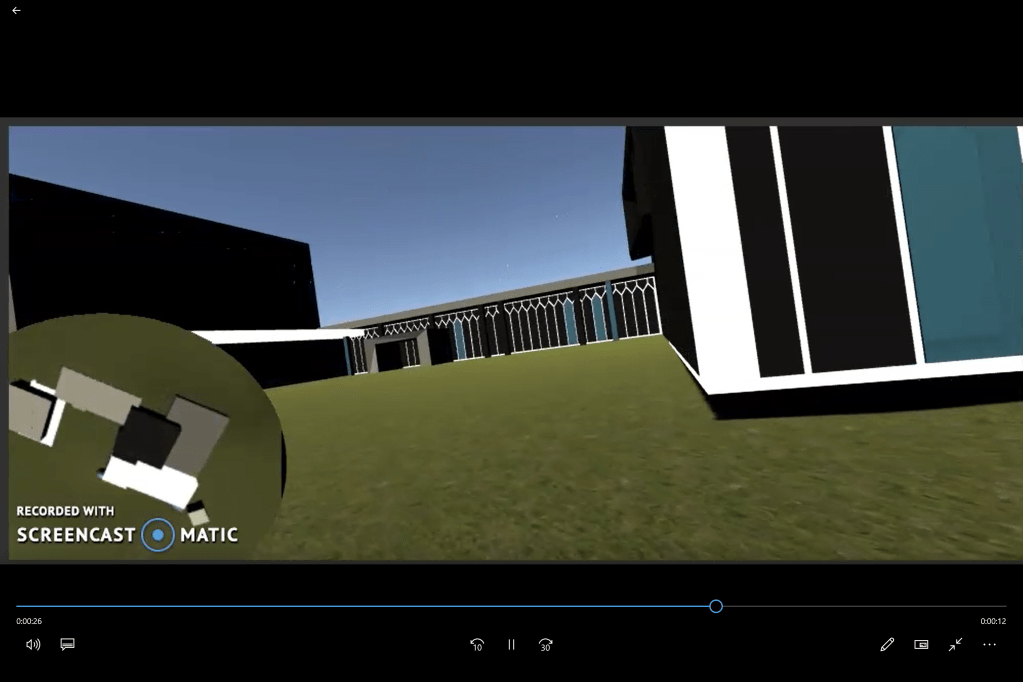
  • Navigating with Augmented Reality. Ph.D. candidate Leo Soares, together with Masters student Samat Imamov and undergrads Jean-Marc Cassier and Wesley Nguyen, crafted and analyzed an augmented reality prototype to help groups of hikers stay connected on long hikes–despite the different hiking speeds that often causes conflicts on hikes.
  • FitAware. Shuai Liu, Zhennan Yao, and Jixiang Fan, grad students in Computer Science, are working on a health and fitness app that helps small groups 3-6 people who know each other well to help each other through competition and cooperation. Shuai is continuing the work toward his thesis, to be completed in May 2020.
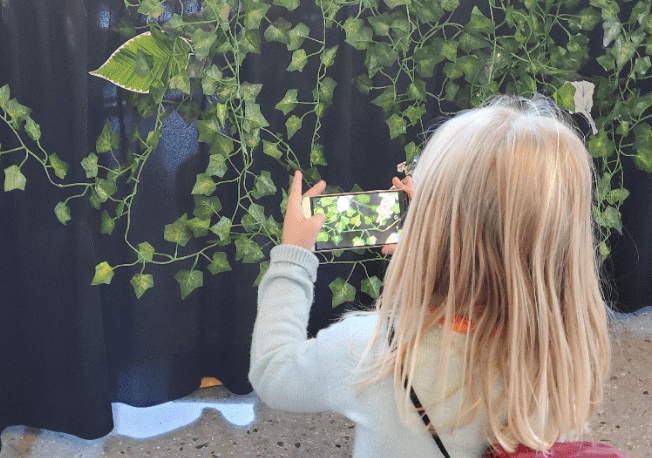
  • Disorientation and Outdoor Tasks. Ph.D. students Neelma Bhatti and Morva Saati explored how young children become distracted during outdoor-style tasks like plant identification–particularly in busy environments. While tech is a big draw, and competing tech interests (and nature-related occurrences) can draw attention, the biggest distractors came from family and friends.
  • Disease on the Trail. Grad students Tim Stelter and Deepika Subrinaminan examined factors that can be instrumental in creating a system that tracks diseases outdoors. Extended trails like the Appalachian Trail, with large bubbles of hikers that traverse trails over many weeks or months, can create avenues for viruses, tick-borne diseases, and other diseases. Tim and Deepika examined a long list of disease-related apps along the axes of notification, rapid response, and knowledge creation.
  • Biometrics Outdoors. Grad students Grace Wusk, Harsh Sanghavi and Arjuna Sondhi explored how biometrics can be used to understand trail experiences. Specifically, they merged GPS data from a mobile phone with data from the Empatica E4 wristband that records photoplethysmography (PPG), electrodermal activity (EDA), skin temperature, 3-axis acceleration, and 3-axis orientation. It was challenging to collect meaningful biometric data outside of a highly-controlled lab setting, though quiet, distraction-free trails showed promise.
The Navigating with Augmented Reality Project looked at different ways that AR can help hikers stay in touch with each other, particularly when their different hiking speeds cause them to become separated.
The Shared Outdoor Experiences Project examined how people can share their experiences with friends and relatives who are unable to join them physically.
The Disorientation Project explored how young children are distracted from outdoor learning tasks in busy environments.