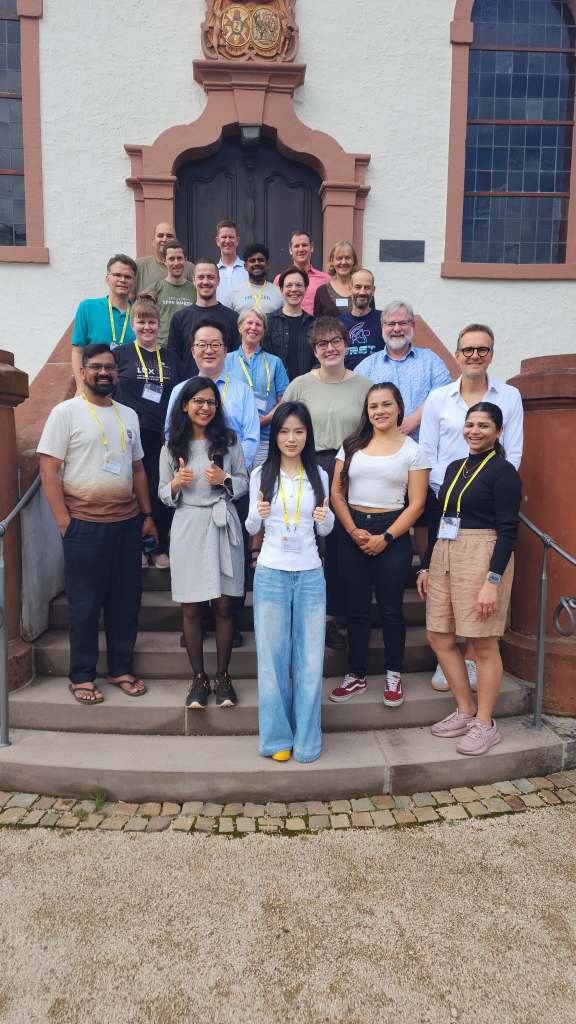
A pair of Tech on the Trail researchers made the trek to Schloss Dagstuhl for a workshop that sought to craft a grand challenges paper for the emerging area of nature HCI. There’s been a lot of work in the area over the last decade or so, including several framework papers that identified key dimensions and categorized prior work, but this workshop provided an opportunity for about 20 researchers and practitioners in the area to identify common challenges and set a course for the future of the field.
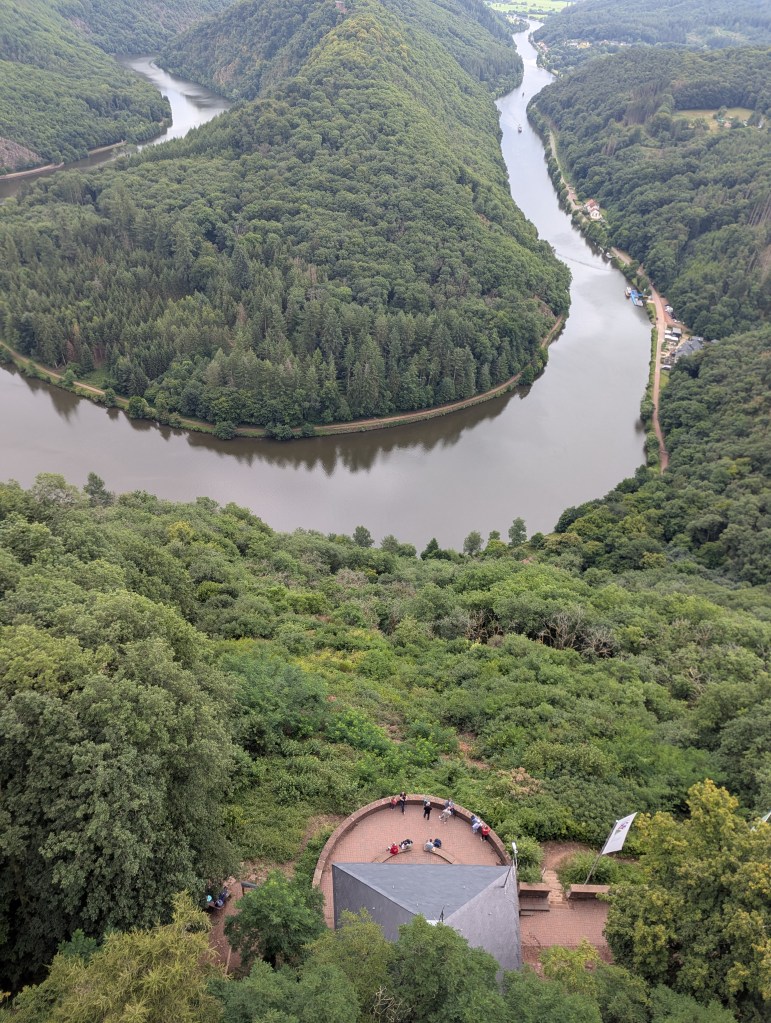
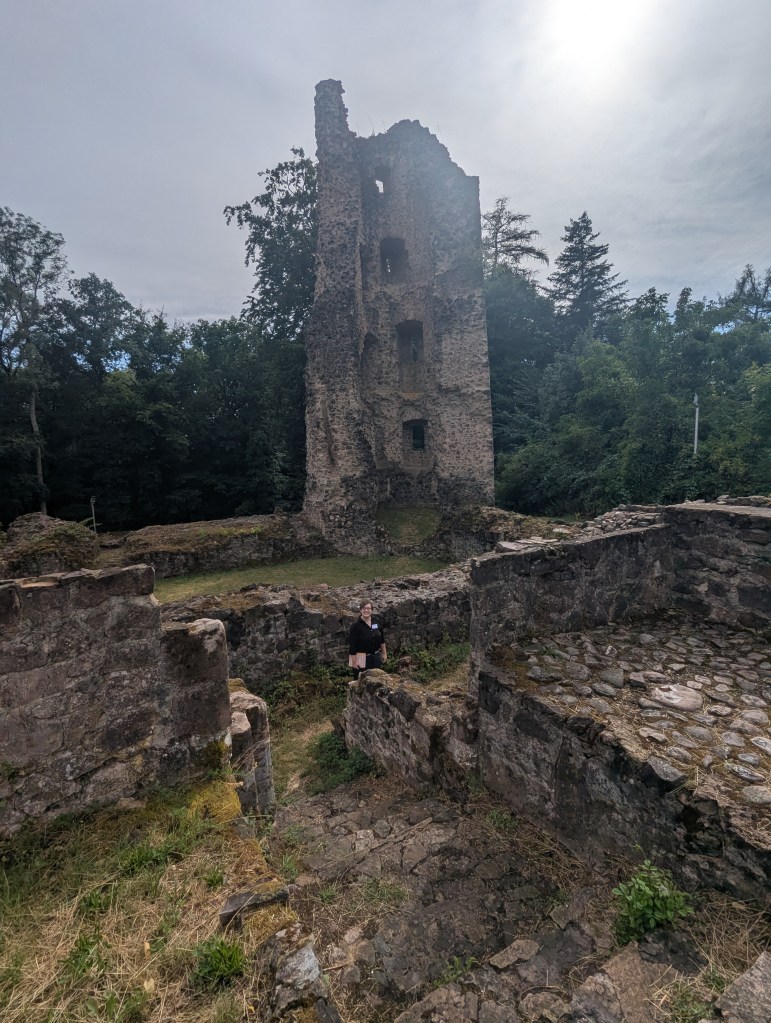
Schloss Dagstuhl specializes in this type of workshop–it’s an isolated castle in the rolling hills of Germany that includes housing, meals, and meeting spaces in a single facility. One of the organizers was the co-editor of the HCI Outdoors book, Michael Jones from BYU. He arranged invitations for Tech on the Trail lab members Scott McCrickard and Natalie Andrus. Mike and the other organizers, Floyd Mueller, Zhuying Li, and Masahiko Inami, arranged and led work sessions in which we discussed research thrusts, identified and categorized related work, demoed ongoing conceptual projects, and held writing sessions.
The core output from our efforts is a grand challenges paper that is currently under review. I’ll update this post as the paper gets closer to publication.
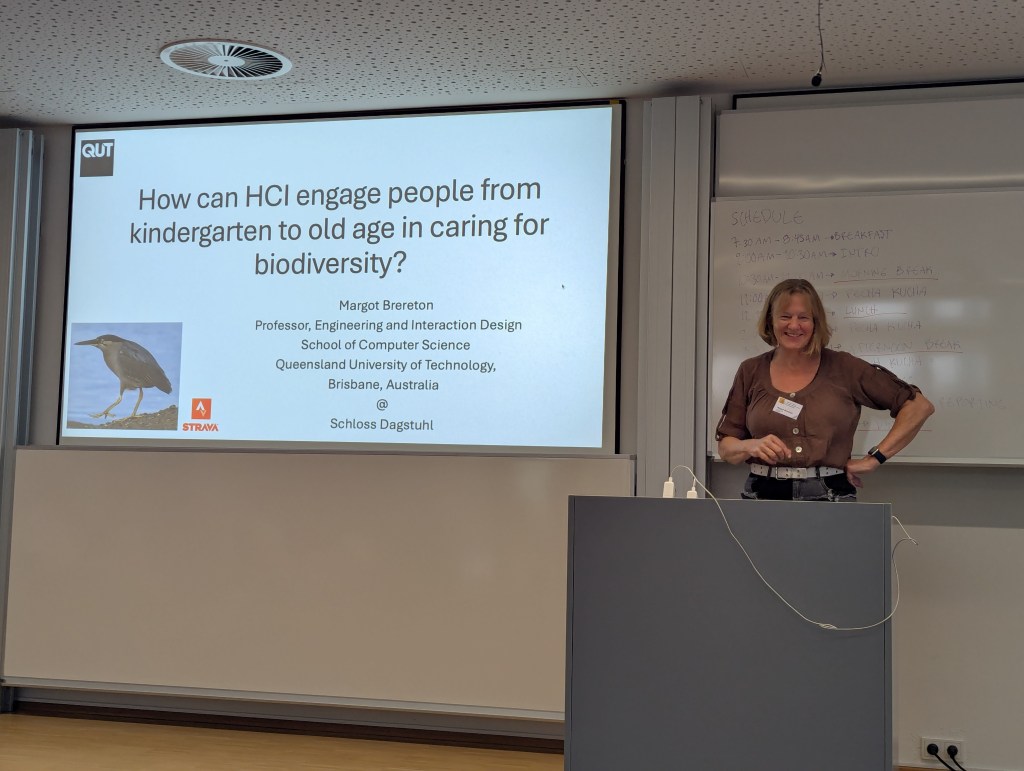
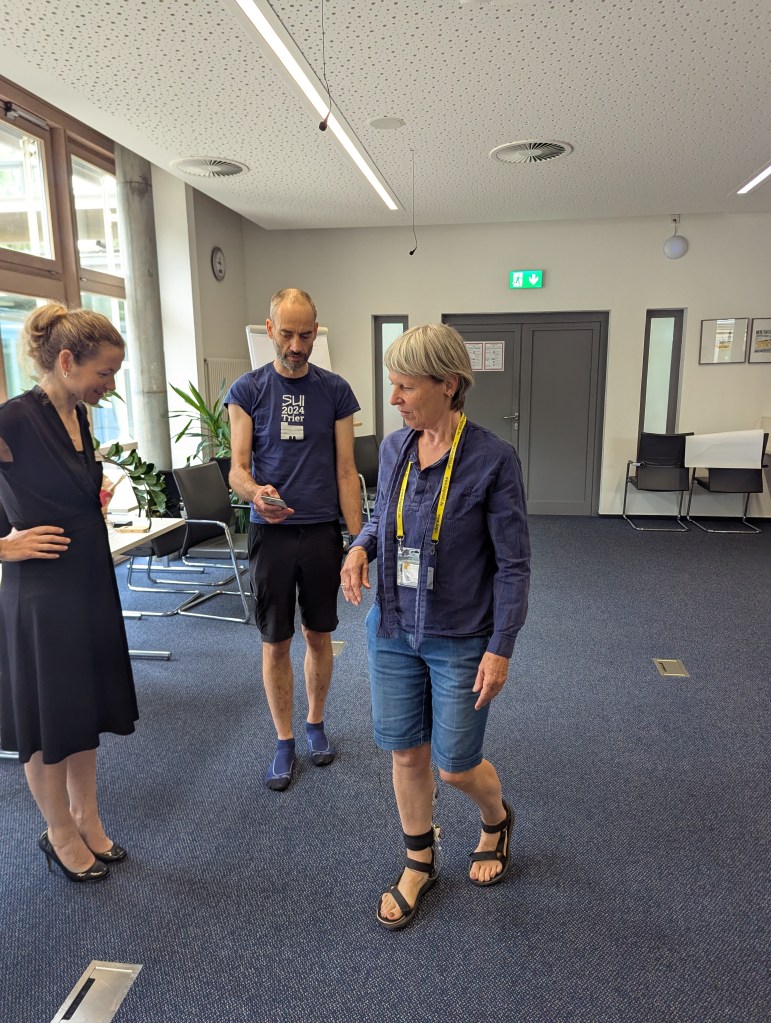
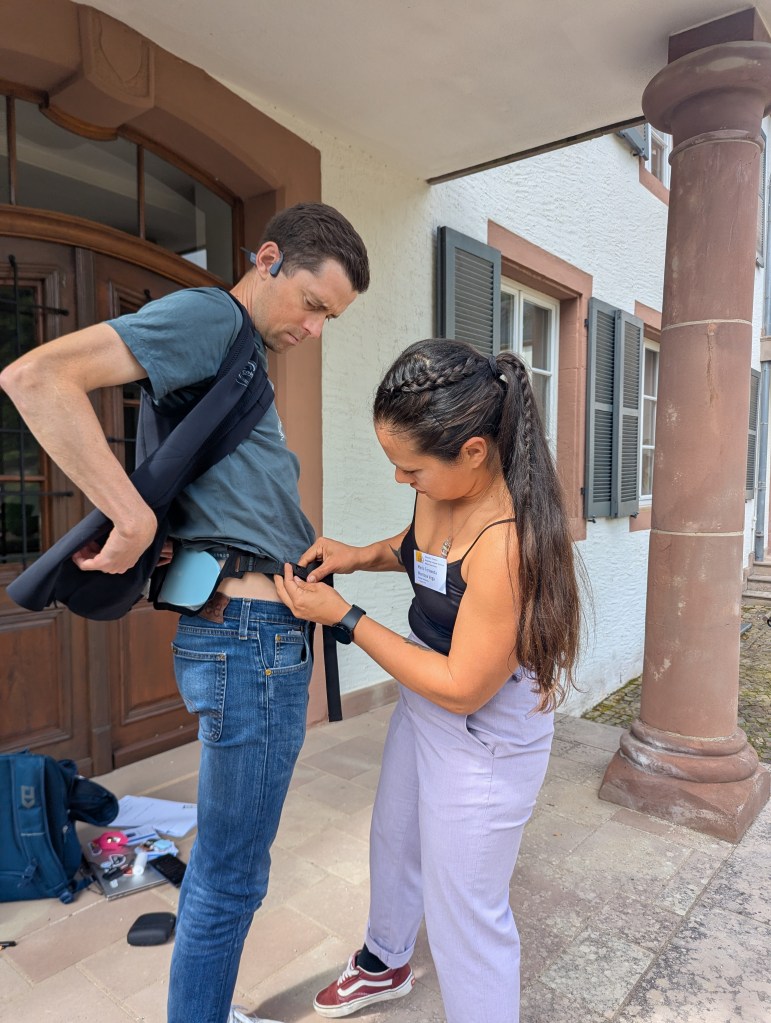
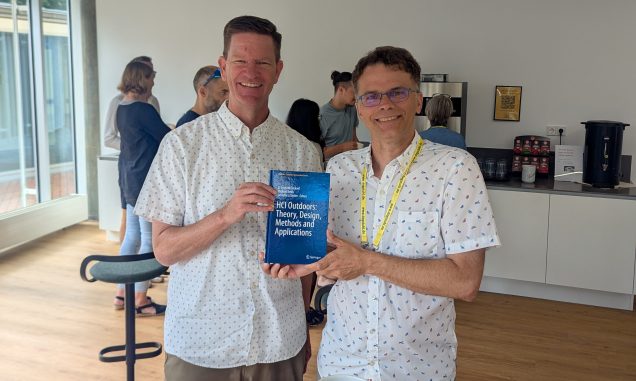
There was a great balance of work and play at the Schloss Dagstuhl workshop. The talks were brief, more of an introduction than an explanation. The work sessions were very engaging and hands-on. The demos tended to be more tech-focused and future-looking rather than finished products. The afternoon adventure at Treetop Adventure Saarschleife Saarland provided some informal connection time with nature and with each other. And Michael Jones and Scott McCrickard got to exhibit their HCI Outdoors book since the facility has a library of tech-related books. (For each workshop they bring out books authored and edited by attendees for display in the break room. (No, we didn’t coordinate our shirts.))
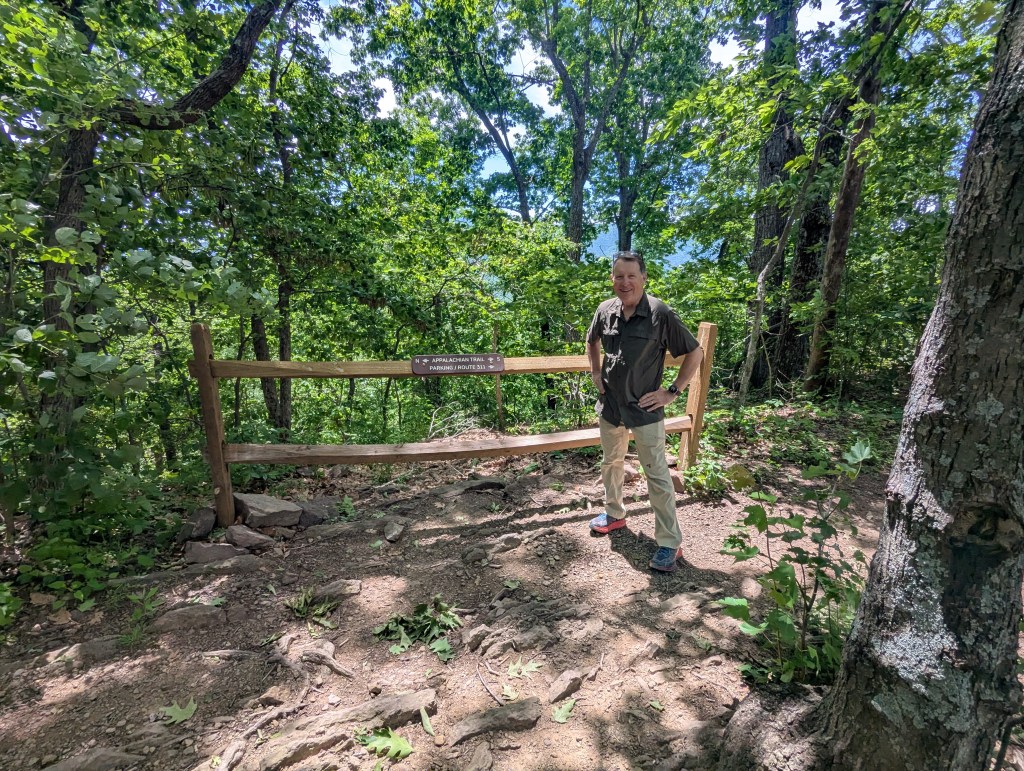
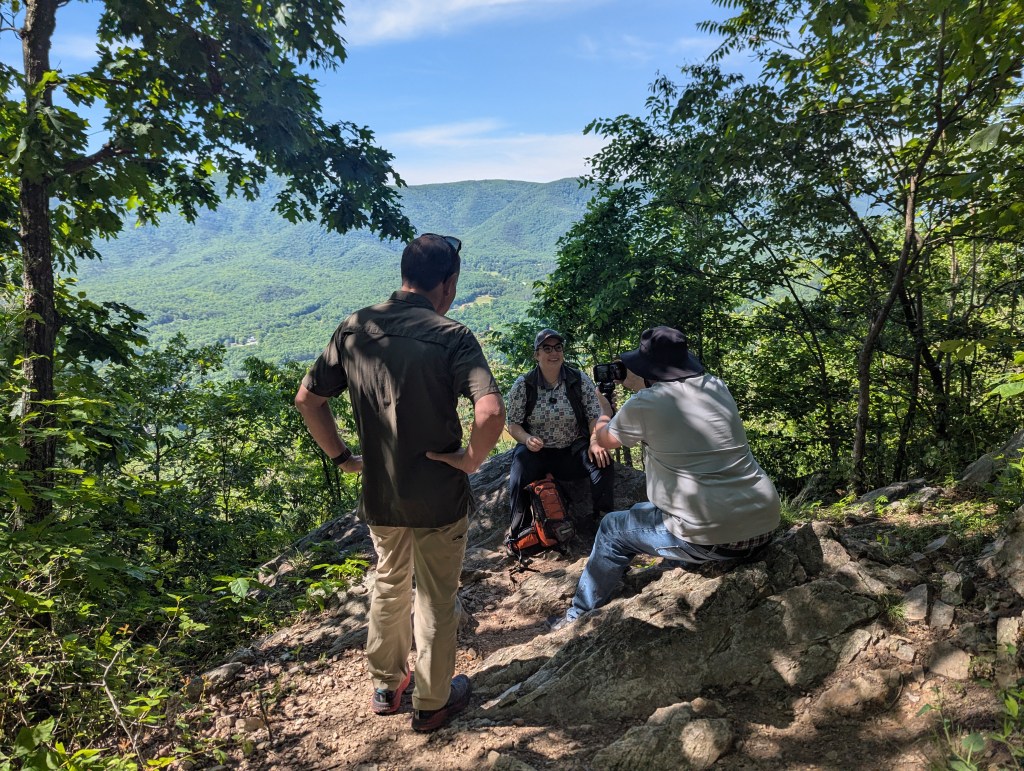
The Tech on the Trail project was featured in a piece by WSLS’s local news legend, John Carlin. Tech on the Trail researchers Scott McCrickard and Natalie Andrus met up with John at the McAfee Knob Trailhead, where a newly-constructed bridge crosses Highway 311, and we walked and talked for a stretch of the Appalachian Trail. He assembled a great story about our lab’s work that was featured on the 6pm news broadcast. A story and extended video segment is available on the WSLS web site at https://www.wsls.com/news/local/2025/05/29/john-carlins-outdoors-tech-on-the-trail/
John Carlin on the AT near McAfee Knob trailhead
John Carlin went to great lengths to make sure we felt at ease. I reviewed a lot of his “John Carlin’s Outdoors” segments at the WSLS web site, and he always seems to do a great job of highlighting interesting outdoor adventure spots around the area. He’s majorly into outdoor recreation, including fly fishing, hiking, biking, paddling, running, and he’s shown to be game for much more. He knew his stuff about technology and the outdoors leading into the story, which really shone through in the questions he asked and the apps he had at hand. He expressed real joy out on the trail, stopping regularly to ask questions of everyone we passed along the trail, or just to look at a flower, plant, or lizard or to listen to the birds.
Natalie Andrus at Mason Cove Overlook
Ph.D. student Natalie Andrus talked about tech on the trail research led by her and her fellow Ph.D. students. Her primary interests are in technology’s role in fostering intergenerational connections (particularly among seniors), including the role that nature adventures can have in fostering communication with homebound seniors. She also talked about our trail app for hikers and the social media analysis that has been core in our lab’s work. Plus, she definitely had the best backdrop in her video segment, stopping at Mason Cove Overlook to enjoy the view and to talk research.
We’ve had a lot of recent successes in the eight years of this project, thanks in large part to our NSF Strengthening American Infrastructure grant along with internal funding from Virginia Tech’s Institute for Creativity, Arts, and Technology (ICAT), the Institute for Science, Culture, and the Environment (ICSE), the Center for Human Computer Interaction (CHCI), and the Department of Computer Science. All of this support has helped us take steps to understand the many stakeholders that work together to make the trail an enjoyable and informative experience: thru hikers, section hikers, trail organizations like the ATC and ALDHA, boots on the ground trail runners, hostel owners, trail towns, Scout organizations, trail angels, and many more. I contrast this news article with one from the Roanoke Times in the earliest days of our Tech on the Trail efforts when trail tech was only beginning to rise in popularity. Now it’s part of every phase of most hikers’ journeys–preparation, experience, and reflection–and we’re left trying to make sense on the many digital artifacts that the stakeholders leave behind. Let the journey continue!
PIs Kris Wernstedt and Scott McCrickard, along with graduate students Yusheng Cao and Wei-Lu Wang, attended TrailFest 2025 in Hot Springs NC to launch our new SmartTrail mobile app to thru hikers. Supported by our NSF SAI grant, the app surveys hikers every week for up to 14 weeks during their thru hike of the Appalachian Trail. The survey probes their technology use, their connectivity with others, and their changing tolerances for risk throughout their hike.
There’s a great AirBnB, the Dorland Cottage on Bridge Street, right along the Appalachian Trail as it passes through downtown. We set up there with beverages, snacks (freshly made chocolate chip cookies and fruit!), and a place to sit and watch the world go by. We distributed the latest version of our SmartTrail app (and lots of snacks!) to thru-hikers who were interested, and encouraged everyone to stop and rest for a while even if they were not interested. We were pleased to recruit 50 hikers to consider using our app, and we caught up with many more who are looking to keep their digital burdens low while on the trail.
In addition, we hosted a booth in the festival area. We were able to talk with festival attendees about results from our prior surveys, interviews, observations, and social media and blog analysis. Best of all, we got to enjoy the live music, 40+ booths, and festival food while we were there. The long weekend was capped off with a trip to Big Pillow Brewing and Grey Eagle Taqueria, which have re-opened in the downtown area. As always, the area was filled with a lively mix of hikers and locals.
The festival was cancelled last year due to hurricane damage, and there remains significant damage to the downtown area. This weekend was billed as we were happy to return this year and support the local community. We weren’t able to hike any of the local trails on this trip, but we encourage anyone who loves the outdoors and the Appalachian Mountains to plan a trip to Hot Springs. They are ready for you!
Researchers and hikers engage in discussions about the new SmartTrail app at TrailFest 2025 in Hot Springs, NC. The Dorland Cottage is a great place to recruit: right across Walnut Street runs the Appalachian Trail, with Bluff Mountain Outfitters visible in the distance and Dollar General behind us.
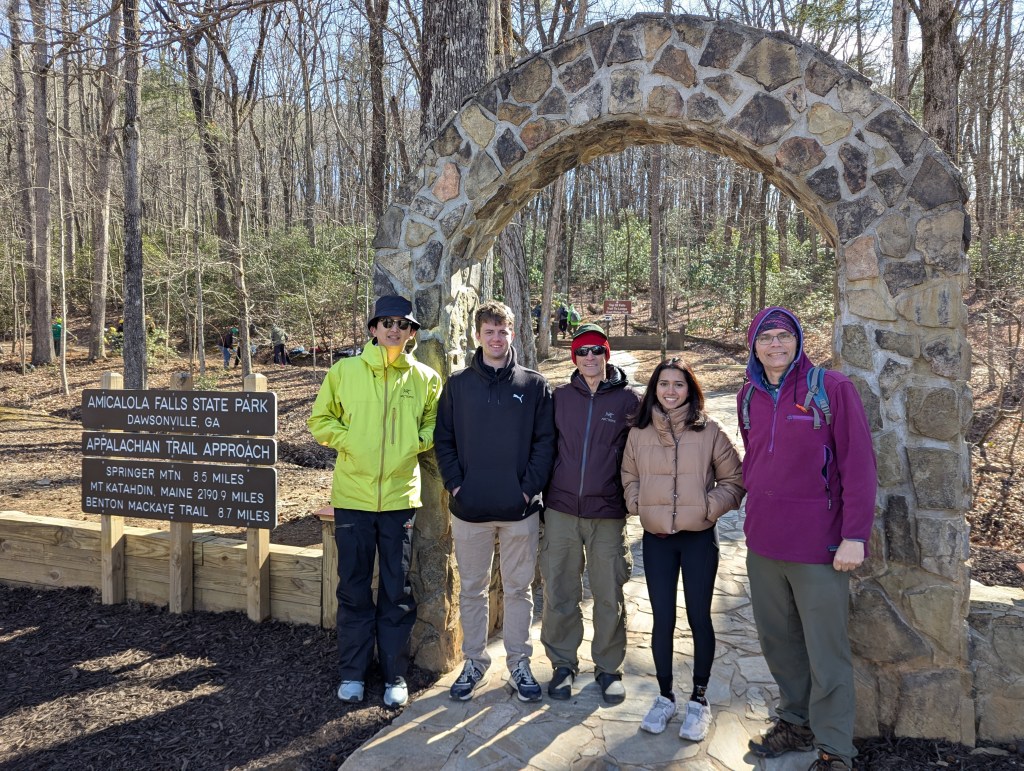
Our NSF project team attended the unofficial kickoff of the hiking season–AT Gateways–from February 28 to March 2 at Amicalola Falls State Park in Georgia. AT Gateways, previously known as the AT Kickoff, includes activities, demonstrations, talks and booths (including ours!), and vendors, mainly at the lodge. At the event, we launched the latest version of our SmartTrail app, a weekly questionnaire for long-distance hikers that helps assess the mental and physical issues that hikers experience.
In attendance from our team were PIs Kris Wernstedt and Scott McCrickard, along with students Yusheng Cao, Jennifer Chandran, and Gibbs Gresge. We divided our recruiting efforts between the main lodge (where most of the festivities occurred) and the visitor center and trailhead arch (where many thru hikers register, get their numbered hiker tag, and start their hike). The trailhead was definitely the best place to recruit–though many of the hikers there were anxious to start their hikes. We recruited about 25 hikers, and we had great conversations with many other current and past hikers.
In addition to launching our app, at the event we presented a talk and hosted a booth that featured findings from our prior research efforts, including our newly released paper led by project co-PI Shalini Misra that summarized our interviews with AT resource managers. There were about 30 people at the talk, and I was struck by the overall positive feedback toward technology use on the trail. This is different than talks even just five years ago–it seems like the presence of technology on the trail is becoming an accepted part of the trail culture (for better and worse).
Overall, it was an impressive event, well attended by people who care deeply about the trail. The park is lovely, and our cabin both had a secluded feel and also felt close to the sights and sounds of the park. We look forward to attending in future years.
The research team at Amicalola Falls State Park, the unofficial kickoff of the hiking season: Yusheng Cao, Gibbs Gresge, Kris Wernstedt, Jennifer Chandran, Scott McCrickard






 Technology on the Trail